

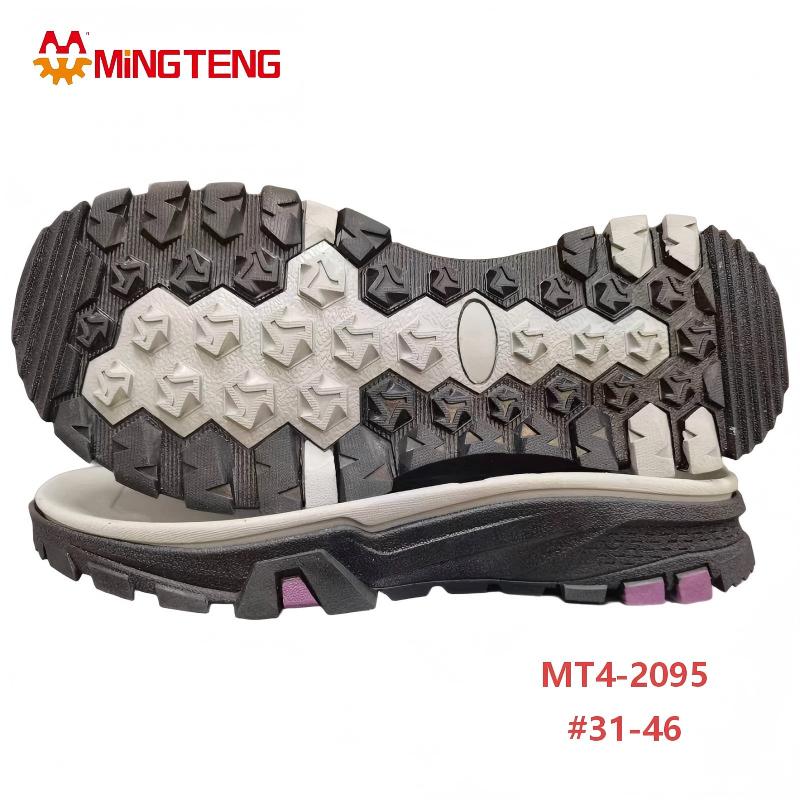
Choosing the right shoe sole material is important for both footwear brands and shoe manufacturers. The sole has a direct impact on a shoe’s comfort, durability, flexibility, weight, and production cost. Different materials have different advantages, so the right choice depends on the type of footwear and its specific requirements.
Today, EVA, rubber, TPU, TPR, and PU are some of the most commonly used shoe sole materials. Understanding their basic differences can help you make a better decision when developing or sourcing footwear.
EVA Shoe Soles
EVA is widely used for sneakers, running shoes, sandals, and slippers because it is lightweight, flexible, and comfortable. EVA soles also provide good cushioning, making them a popular choice for everyday and sports footwear.
One of the main advantages of EVA is its low weight. If you are developing lightweight footwear, EVA can be a practical option. It is also relatively cost-effective and can be produced in different colors and designs. However, standard EVA may not have the same abrasion resistance as rubber or TPU, especially in shoes that are used in demanding environments.
Rubber Shoe Soles
Rubber is a traditional shoe sole material known for its durability and excellent grip. It is commonly used for work shoes, outdoor shoes, boots, sneakers, and other footwear that needs good wear resistance.
Compared with EVA, rubber soles are usually heavier, but they can provide better traction and durability. For footwear that will be used outdoors or on rough surfaces, rubber can be a good choice. The final performance and cost depend on the rubber formulation, sole design, thickness, and production process.
TPU Shoe Soles
TPU is becoming increasingly popular in modern footwear because it offers a good balance of durability, flexibility, and appearance. TPU soles are often used in sneakers, sports shoes, safety shoes, and outdoor footwear.
TPU can provide good abrasion resistance while still maintaining flexibility. It can also be used for transparent, translucent, or specially designed sole components. Compared with EVA and TPR, TPU may have a higher material cost, but it can be a suitable choice when durability and performance are important.
TPR Shoe Soles
TPR is another common material used in footwear manufacturing. It combines some characteristics of rubber and thermoplastic materials, providing good flexibility, grip, and durability at a relatively reasonable cost.
TPR is often used for casual shoes, children’s shoes, boots, slippers, and everyday footwear. It can also be produced in different colors and designs, making it suitable for many types of footwear.
PU Shoe Soles
PU, or polyurethane, is commonly used for work shoes, safety shoes, casual shoes, and comfort footwear. PU soles are relatively lightweight and can provide good cushioning and comfort.
Another advantage of PU is its versatility. Different formulations can be developed for different performance requirements. However, the quality and durability of PU soles can vary depending on the formulation and manufacturing process, so choosing an experienced supplier is important.
How to Choose the Right Shoe Sole Material
There is no single best shoe sole material for every product. If lightweight construction and cushioning are important, EVA may be a suitable choice. If you need high durability and strong grip, rubber may be more appropriate. TPU can be considered when you need a balance of durability, flexibility, and modern appearance, while TPR and PU can offer a practical balance between performance and cost.
When choosing a material, you should also consider the type of shoe, target market, expected usage, sole design, required hardness, production quantity, and budget. The material itself is only one part of the final sole performance. Sole structure and manufacturing quality can also have a major impact.
Custom Shoe Sole Solutions
For custom footwear projects, the right material should be selected based on the actual requirements of the finished shoe. A professional shoe sole supplier can help you compare different materials and recommend a suitable solution based on your design, target price, and performance requirements.
If you are looking for custom shoe soles for sneakers, sports shoes, casual shoes, work shoes, or outdoor footwear, you can send us your design or requirements. We can help you choose a suitable sole material and develop samples for your project.
Contact us today to discuss your custom shoe sole requirements and get a quotation.


Leave a Reply